
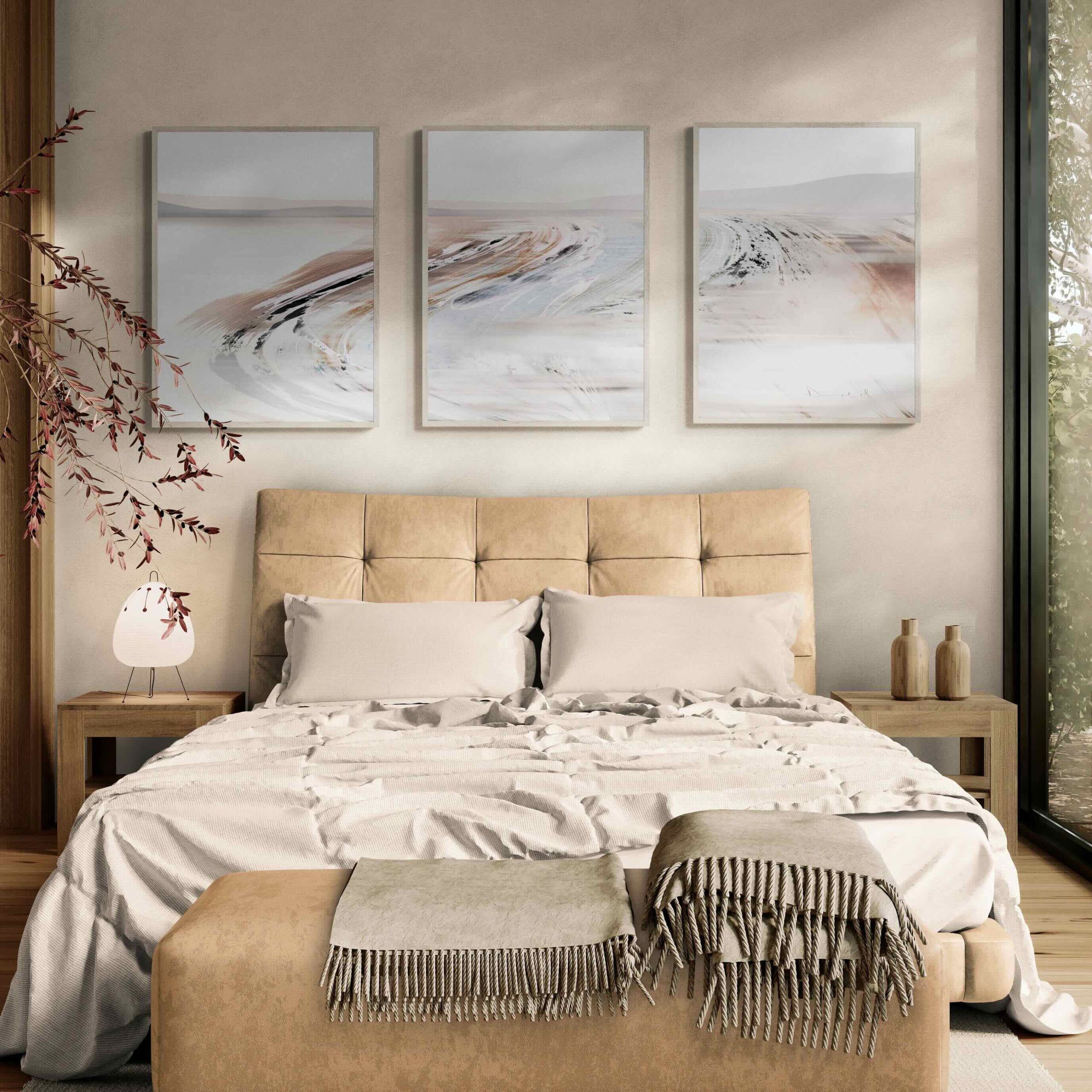

Triptych Fine Art Photography – A Harmonious Narrative In Three Acts
Exploring the Art and Intent Behind the Triptych Collection
Triptych fine art photography offers a way to tell stories that are too expansive for a single frame. In the Triptych Collection, each series of three images is carefully composed to create a visual narrative—where balance, contrast, and rhythm unfold across multiple frames. These works are not simply decorative; they are immersive and intentional, designed to transform a space and deepen the viewer’s connection with the subject.
At the heart of this collection lies the desire to move beyond the singular moment. These works are not simply decorative groupings; they are deliberate studies in mood, motion, and meaning. Carefully curated to speak to each other, the prints are aligned by shared palettes, textures, and tonal atmospheres—yet each one contributes a unique voice to the whole.
Act I: Balance
In any strong composition, balance is both visual and emotional. A triptych allows me to explore this on a deeper scale. While one image may carry weight—a darkened horizon, a solitary tree—the adjacent frame offers release: openness, breath, light. The third may act as a quiet resolution or a provocation, asking the viewer to return and reassess.
When collectors engage with a triptych, they’re invited into an active relationship. The eye moves, the mind pauses, and the space between images becomes charged with its own tension and harmony.
Act II: Contrast
Where balance brings calm, contrast introduces energy. The use of opposing elements—sharp versus soft, shadow versus radiance, stillness versus motion—creates a kind of visual dialogue that enlivens the series. It’s within these contrasts that story emerges: not as something fixed, but as something felt.
Many of the triptychs are drawn from the same environment, shot in a single session or season. Yet by shifting perspective or playing with depth, I can extract multiple interpretations from the same place. A dune may appear sculptural in one frame, ethereal in the next, and ancient in the third. This re-seeing is part of what makes the triptych so compelling—it reflects the way memory itself behaves: layered, nonlinear, and always slightly in motion.
Act III: Rhythm
Like a well-written phrase or a line of verse, a successful triptych has rhythm. It leads the viewer, but never forces. It allows breathing room. It builds.
Rhythm is not repetition—it is variation with intent. In these series, I compose with the logic of music: a quiet beginning, a crescendo, a soft landing. Sometimes the central image carries the emotional core; sometimes the flanking frames draw it forward by what they withhold.
This rhythmic structure is what gives the Triptych Collection its immersive quality. In a room, these works don’t just fill a wall—they animate it. The visual weight is spread thoughtfully, creating a harmony that extends into the space itself.
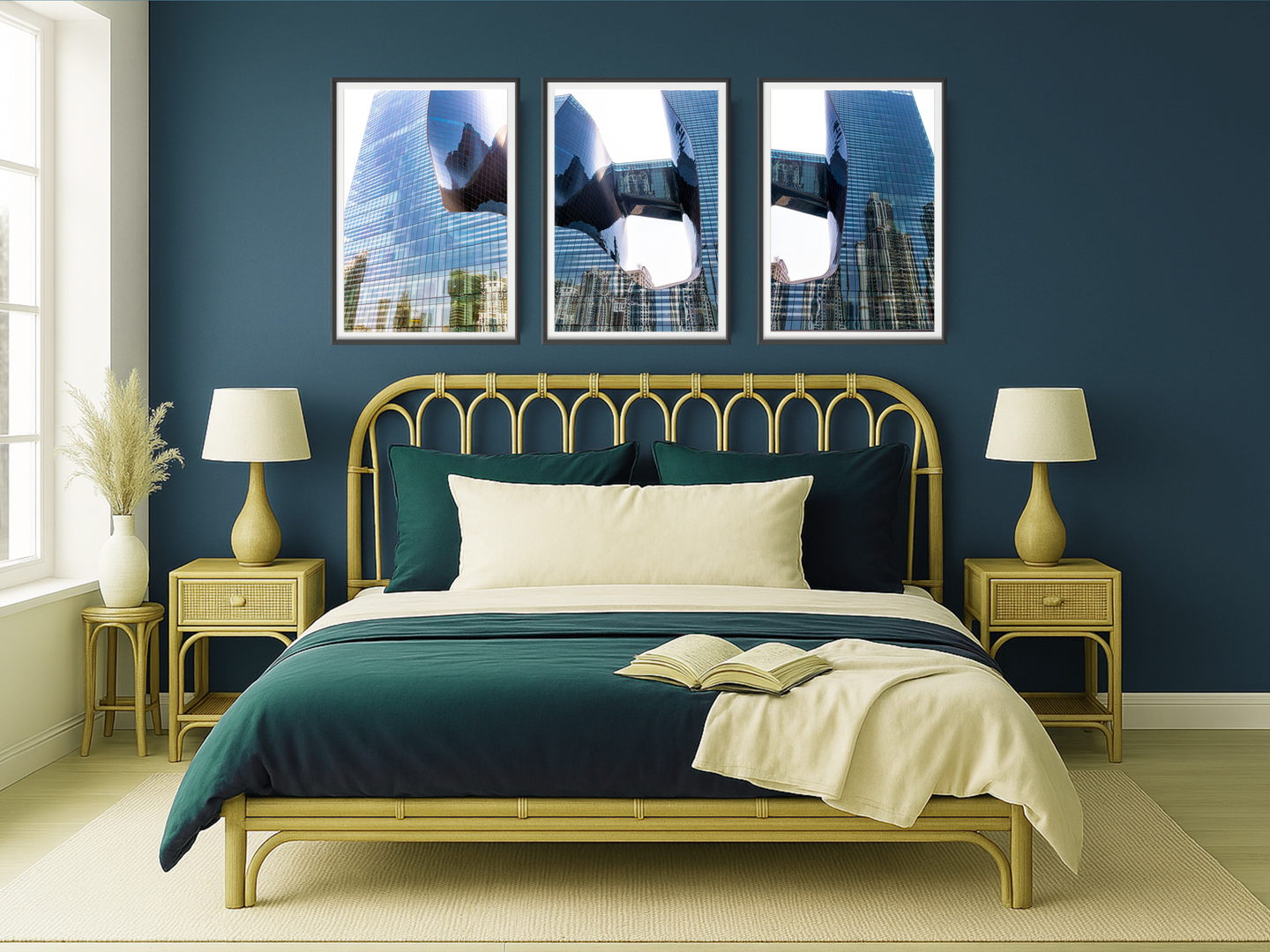
More Than Decoration
For the discerning collector, a triptych offers more than aesthetic appeal. It’s a statement of curation. A piece that elevates the room while inviting reflection. The work becomes not just seen but experienced—a quiet, unfolding conversation over time.
Each triptych is printed in either an open or a limited edition, using archival materials and museum-grade finishes to ensure longevity and integrity. Whether displayed in a residential interior, a corporate space, or a private collection, these series are crafted to hold their power—and their silence—for decades.


0 Comments