
An Ode To Jo-Mari

An Ode To Jo-Mari
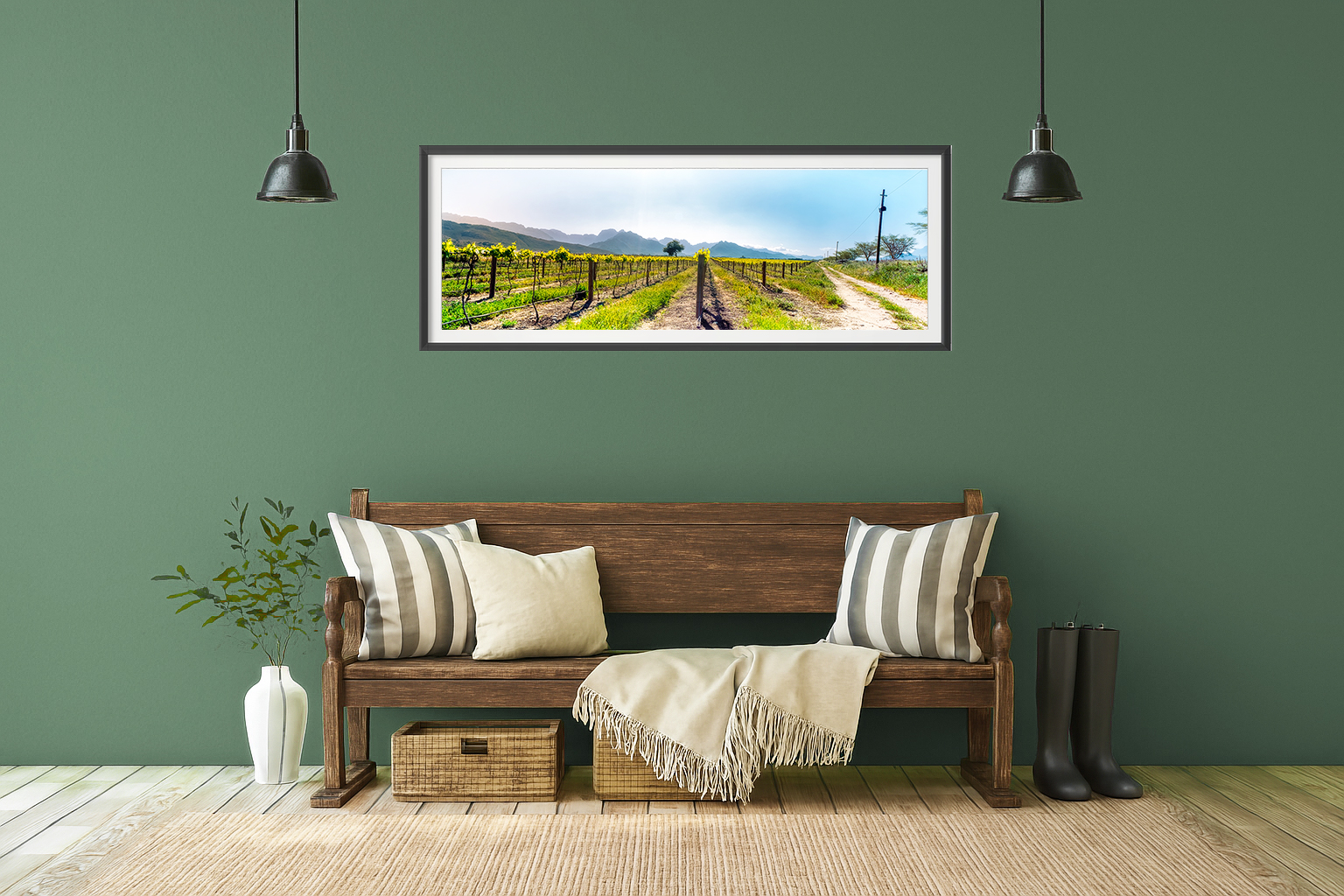
"An Ode to Jo-Mari - Rawsonville, South Africa" is more than an image—it is a tribute to meaningful friendships born in unexpected places and the promise of new opportunities. Captured in the heart of South Africa’s Breedekloof Valley, this evocative photograph blends the soul of the land with the poetic quiet of analogue photography.
Rawsonville, a small wine-growing and farming town nestled on the eastern slopes of the Du Toitskloof Mountains, holds a rich legacy dating back to the mid-1800s. Once part of the historic farm Aan-de-Smalblaar, this area was shaped by pioneers like Johannes Petrus Jordaan, who laid out the original plots that would become Rawsonville in 1859. Today, it forms part of the celebrated Breedekloof Wine Route—just under an hour from Cape Town—where one can still experience the tranquillity and generosity of this close-knit community..
Lamentations 3:22-26
Through the Lord’s mercies we are not consumed,
Because His compassions fail not.
They are new every morning;
Great is Your faithfulness.
“The Lord is my portion,” says my soul,
“Therefore I hope in Him!”
The Lord is good to those who wait for Him,
To the soul who seeks Him.
It is good that one should hope and wait quietly
For the salvation of the Lord.
Surrounded by the Du Toitskloof, Hex River, Slanghoek, and Langeberg mountain ranges, the valley boasts a diversity of soils and microclimates that have made it a haven for cultivating award-winning wines. In winter, snow-dusted peaks reflect the quiet beauty of the landscape, while long, golden summer days invite celebration and connection.
This image was captured on Kodak Professional Ektar 100 film with a Fuji GX 617 Panoramic medium format panoramic camera, a daylight-balanced colour-negative film known for its ultra-vivid colour palette, fine grain, and remarkable sharpness. The cinematic quality of Ektar 100, achieved through Kodak’s advanced T-GRAIN emulsion and VISION Film technology, results in an aesthetic richness and tonal depth that digital photography cannot replicate. Every detail—from the contour of a vineyard row to the gradient of sky—is rendered with clarity, subtlety, and a painterly warmth unique to analogue capture. Developed and printed with care, this piece is a true analogue work of art.
There is a look about the film that digital cannot produce. No AI—pure film and vision. Presented as an open edition for those who value authenticity, craftsmanship, and the timeless narrative of Africa through the photographic lens
This is a signed and embossed Open Edition print.
"An Ode to Jo-Mari"


Price range: $1 300.00 through $1 500.00
An Ode To Jo-Mari
An Ode To Jo-Mari
"An Ode to Jo-Mari - Rawsonville, South Africa" is more than an image—it is a tribute to meaningful friendships born in unexpected places and the promise of new opportunities. Captured in the heart of South Africa’s Breedekloof Valley, this evocative photograph blends the soul of the land with the poetic quiet of analogue photography.
Rawsonville, a small wine-growing and farming town nestled on the eastern slopes of the Du Toitskloof Mountains, holds a rich legacy dating back to the mid-1800s. Once part of the historic farm Aan-de-Smalblaar, this area was shaped by pioneers like Johannes Petrus Jordaan, who laid out the original plots that would become Rawsonville in 1859. Today, it forms part of the celebrated Breedekloof Wine Route—just under an hour from Cape Town—where one can still experience the tranquillity and generosity of this close-knit community..
Lamentations 3:22-26
Through the Lord’s mercies we are not consumed,
Because His compassions fail not.
They are new every morning;
Great is Your faithfulness.
“The Lord is my portion,” says my soul,
“Therefore I hope in Him!”
The Lord is good to those who wait for Him,
To the soul who seeks Him.
It is good that one should hope and wait quietly
For the salvation of the Lord.
Surrounded by the Du Toitskloof, Hex River, Slanghoek, and Langeberg mountain ranges, the valley boasts a diversity of soils and microclimates that have made it a haven for cultivating award-winning wines. In winter, snow-dusted peaks reflect the quiet beauty of the landscape, while long, golden summer days invite celebration and connection.
This image was captured on Kodak Professional Ektar 100 film with a Fuji GX 617 Panoramic medium format panoramic camera, a daylight-balanced colour-negative film known for its ultra-vivid colour palette, fine grain, and remarkable sharpness. The cinematic quality of Ektar 100, achieved through Kodak’s advanced T-GRAIN emulsion and VISION Film technology, results in an aesthetic richness and tonal depth that digital photography cannot replicate. Every detail—from the contour of a vineyard row to the gradient of sky—is rendered with clarity, subtlety, and a painterly warmth unique to analogue capture. Developed and printed with care, this piece is a true analogue work of art.
There is a look about the film that digital cannot produce. No AI—pure film and vision. Presented as an open edition for those who value authenticity, craftsmanship, and the timeless narrative of Africa through the photographic lens
This is a signed and embossed Open Edition print.
"An Ode to Jo-Mari"
Price range: $1 300.00 through $1 500.00
Print Information
The Cameras
Your Subtitle Goes Here
Every photograph begins with the camera it was created on. Whether captured on traditional photographic film or a modern digital camera, every image is produced with the same commitment to craftsmanship and authenticity.
Film negatives and transparencies are personally developed by hand before being professionally scanned and prepared for printing. Digital photographs are captured in RAW format and carefully processed to preserve the original scene rather than alter it.
Large Format
Shen-Hao 4×5
4×10
5×7
8×10
Korona 7×17
Pinhole Cameras
Medium Format
Baby Rolleiflex
Yashica 44
Yashica Mat 124
Pentax 645N
Mamiya 645 1000S
Pentax 6×7
Fuji GX617 Professional
Various panoramic roll-film systems
35mm
Nikon F5
Nikon F6
Digital
Nikon D800E
Nikon D4
Nikon D5
Fujifilm GFX100
The Collections
Your Subtitle Goes Here
Every collection represents years of exploration, patience and careful craftsmanship. Some photographs are captured digitally, while others originate on traditional photographic film.
Film photographs are developed by hand before being scanned using professional equipment. Digital RAW files receive only careful tonal and colour refinement, preserving the integrity of the original photograph.
Collections are available as either Open Editions or Limited Editions, depending on the artwork.
The Triptych Collection Sizes
Your Subtitle Goes Here
Triptych Size Guide
For Triptych Collection artworks, the selected size applies consistently across all three panels.
In compositions where the side panels are portrait and the centre panel is landscape, the selected size refers to the maximum height of the artwork. For example, when A3 is selected, the two portrait side panels are produced to the A3 long dimension, and the centre landscape panel is scaled proportionally to match that same height.
Where all three panels are landscape or all three are portrait, the selected format remains consistent throughout the set — A0 is A0, A1 is A1, A2 is A2 and A3 is A3. Sizes are not mixed between panels.
Available Triptych Collection sizes: A0, A1, A2 and A3.
The Editions
Your Subtitle Goes Here
Limited Editions
Limited Editions are permanently restricted to 25 prints worldwide, regardless of the size or medium selected.
Once the edition has sold out, no additional prints of that artwork will ever be produced.
Signing & Numbering
Every Open and Limited Edition print is individually signed, embossed and accompanied by a Certificate of Authenticity.
Each print is hand-numbered—for example: 10/25
This indicates the tenth print produced from a total edition of twenty-five.
The Photographic Process
Your Subtitle Goes Here
Many CFP Prints artworks begin with traditional photographic film.
Each negative or transparency is developed by hand using carefully selected chemistry before being professionally scanned for printing. Every stage of the workflow is managed with the objective of faithfully reproducing the original photograph rather than digitally transforming it.
Every photograph represents a real moment, captured through experience, patience and light—not artificial intelligence.
The Printed Medium
Your Subtitle Goes Here
CFP Prints is produced exclusively on museum-quality Hahnemühle FineArt media.
Hahnemühle Cézanne Canvas
A 430 gsm, 100% cotton canvas offering exceptional colour depth, fine detail and long-term archival stability. Its natural matte surface makes it ideal for gallery-quality presentation.
Hahnemühle Photo Rag® Matt Baryta
A 308 gsm, a natural white, 100% cotton paper with a traditional barium sulphate coating. This paper offers rich blacks, luminous highlights, and refined surface texture. It is acid- and lignin-free, with certified age resistance.
Certificate of Authenticity
Your Subtitle Goes Here
Every CFP Prints artwork is accompanied by a Certificate of Authenticity (CoA)—a signed and embossed document that formally certifies the originality, provenance, and technical details of the artwork.
Issued with both Limited Edition and Open Edition works, the certificate confirms that the artwork was produced exclusively by CFP Prints using museum-quality archival materials and professional printing standards.
Collectors, galleries, and institutions are encouraged to retain the Certificate of Authenticity with the artwork at all times. It forms an important part of the artwork’s provenance and assists in verifying authenticity for resale, exhibition, insurance, and archival cataloguing.
Caring for Your Print
Your Subtitle Goes Here
Every CFP Prints artwork is produced using museum-quality archival materials designed to provide exceptional longevity when properly cared for.
To help preserve the beauty of your artwork for generations:
- Avoid prolonged exposure to direct sunlight or strong reflected light.
- Dust gently with a soft, dry microfibre cloth or soft artist’s brush. Never use household cleaners, solvents, or abrasive materials.
- Display or store your artwork in a dry, temperature-controlled environment, away from excessive humidity or heat.
- Canvas prints are protected with a professional matte archival varnish and may be gently cleaned with a soft, slightly damp cloth when necessary.
With appropriate care, your CFP Prints artwork will retain its richness, detail, and archival quality for many years.